How to Import Used Cars from China: A Step-by-Step Guide for Overseas Buyers
Learn how to import used cars from China step by step, from choosing a vehicle and checking documents to payment, shipping, customs clearance, and delivery.
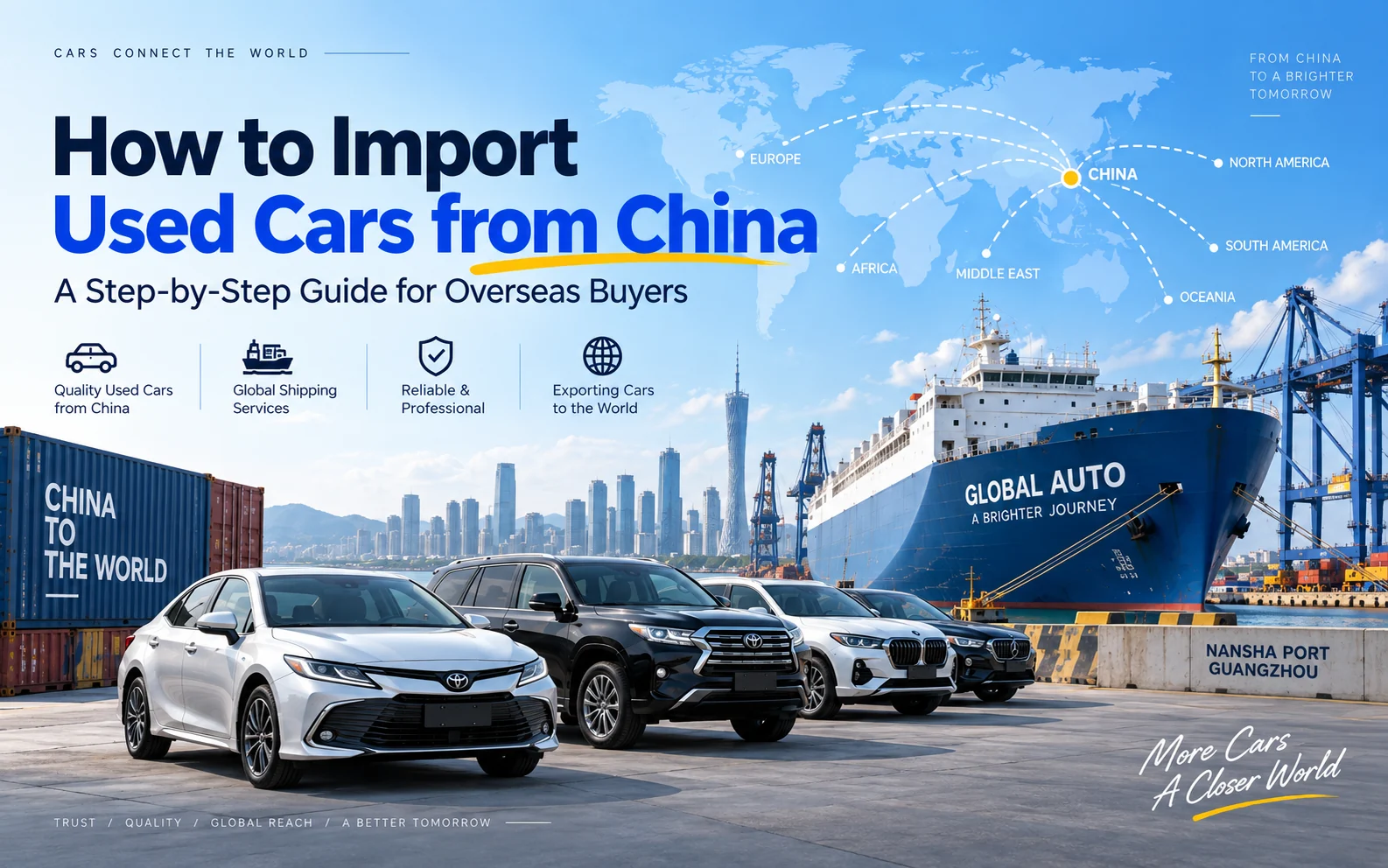
China has become an increasingly important source of used cars for international buyers and car dealers.
Buyers can find a wide range of vehicles, including Toyota, Honda, Hyundai, Volkswagen, Ford, BYD, Chery, Haval and many other brands.
However, importing a vehicle is not simply about finding a good price.
You also need to understand the vehicle condition, export documents, payment terms, shipping method, customs clearance and local import regulations.
This guide explains the basic process of importing used cars from China.
Step 1: Check Your Country's Import Rules
Before choosing a vehicle, check whether your country allows the vehicle to be imported.
Different countries may have different requirements regarding:
Vehicle age
Left-hand drive or right-hand drive
Engine size
Emission standards
Safety standards
Vehicle inspection
Import permits
Customs duties
Taxes
For example, some countries restrict vehicles above a certain age, while others may have special requirements for right-hand-drive vehicles.
Always confirm local regulations before making payment.
Step 2: Tell the Exporter What Car You Need
The more information you provide, the easier it is for the exporter to find the right vehicle.
A typical inquiry can look like this:
Country: Ghana
Destination Port: Tema
Vehicle: Toyota Corolla
Year: 2018–2020
Quantity: 3 units
Budget: USD 8,000–10,000 per vehicle
Trade Term: EXW or FOB
You can also provide requirements for:
Mileage
Color
Engine
Transmission
Accident history
Vehicle condition
Step 3: Check the Vehicle Condition
Never buy a used vehicle based only on a few photos.
Ask the supplier to provide:
Exterior photos
Interior photos
Engine compartment photos
Odometer reading
VIN or chassis number
Vehicle registration information
Inspection report
Video inspection
For higher-value vehicles, a live video inspection can also be helpful.
Pay attention to:
Accident damage
Repainting
Rust
Engine condition
Transmission condition
Warning lights
Tire condition
Interior wear
A lower price does not always mean a better deal.
Step 4: Confirm the Trade Term
Before paying a deposit, confirm whether the quotation is:
EXW, FOB, CFR, CIF, DAP or DDP.
For example:
EXW Guangzhou: USD 8,000
means something very different from:
CIF Tema Port: USD 10,500
Under EXW, the buyer handles most transportation costs.
Under FOB, the exporter normally handles the vehicle until it is loaded onto the vessel in China.
Under CIF, the exporter normally arranges ocean freight and insurance to the destination port.
Always ask:
What exactly is included in this price?
Step 5: Confirm the Payment Terms
Payment terms should be clearly written in the sales agreement or Proforma Invoice.
A common payment structure in international vehicle trading is:
30% deposit + 70% balance before shipment
However, payment terms may vary depending on the supplier and order size.
Before payment, confirm:
Seller company name
Bank account information
Vehicle details
VIN or chassis number
Price
Quantity
Shipping term
Destination port
Payment schedule
Avoid sending money to an unrelated personal bank account without understanding who you are paying.
Step 6: Prepare Export Documents
The exporter normally prepares the documents required for exporting the vehicle from China.
Depending on the transaction, documents may include:
Commercial Invoice
Packing List
Vehicle information documents
Export customs declaration
Inspection documents
Bill of Lading
Certificate of Origin, if required
Other documents required by the destination country
The exact documents can vary by country.
Before shipment, ask your customs broker which documents will be required at the destination.
Step 7: Choose RoRo or Container Shipping
Cars from China are commonly shipped by RoRo or container.
RoRo Shipping
RoRo means Roll-on/Roll-off.
The vehicle is driven directly onto the vessel.
It can be suitable for:
Single vehicles
SUVs
Sedans
Pickup trucks
Commercial vehicles
Container Shipping
Vehicles are loaded inside a shipping container.
Container shipping may be useful when:
Shipping multiple vehicles
Shipping spare parts together
RoRo is unavailable
More cargo protection is preferred
The best option depends on your destination port, vehicle quantity and shipping route.
Step 8: Wait for Shipping Documents
After the vehicle is shipped, the exporter should provide the relevant shipping documents.
One of the most important documents is the Bill of Lading.
It normally contains information such as:
Shipper
Consignee
Port of loading
Destination port
Vessel information
Cargo information
Your customs broker may need these documents to prepare for customs clearance before the vessel arrives.
Step 9: Complete Customs Clearance
After the vehicle reaches your destination country, it must normally go through customs clearance.
Costs may include:
Customs duty
VAT
Import tax
Port charges
Customs broker fees
Inspection fees
Storage charges
These costs are normally not included in an EXW or FOB price.
Before importing, ask a local customs broker to estimate the total import cost.
Step 10: Collect and Register the Vehicle
After customs clearance, the vehicle can be released from the port.
Depending on your country, you may then need to complete:
Local inspection
Vehicle registration
Insurance
License plate application
Roadworthiness testing
After these procedures are completed, the vehicle can legally enter the local market or be delivered to your customer.
How Much Does It Cost to Import a Car from China?
The final cost is not just the vehicle price.
A simple calculation is:
Total Cost = Vehicle Price + China Export Costs + Shipping + Insurance + Destination Charges + Import Duty + Taxes + Local Transport
For example:
Cost | Example |
|---|---|
Vehicle | $8,000 |
China export costs | $500 |
Ocean freight | $1,500 |
Destination charges | $500 |
Import duty and taxes | $3,000 |
Local transport | $400 |
Estimated Total | $13,900 |
The actual amount depends on the destination country and shipping route.
Common Mistakes When Importing Cars from China
Many problems can be avoided by checking a few important points before payment.
Do not:
Buy only based on the lowest price
Ignore local import regulations
Pay before confirming vehicle details
Assume FOB includes ocean freight
Assume CIF includes import duty
Ignore destination port charges
Buy without checking vehicle condition
Import without confirming required documents
A professional importer should understand the total landed cost, not just the vehicle purchase price.
Final Advice
Importing used cars from China can be straightforward when the process is handled correctly.
The basic process is:
Choose the vehicle → Check condition → Confirm price and Incoterm → Sign the agreement → Pay → Export from China → Ship → Customs clearance → Collect the vehicle
The most important thing is to confirm every cost and responsibility before payment.
If you are looking for vehicles from China, send the exporter:
Country:
Destination Port:
Vehicle Model:
Model Year:
Quantity:
Budget:
Preferred Trade Term: EXW / FOB / CIF:
This allows the exporter to prepare a more accurate vehicle quotation and shipping plan.
Note: Vehicle import laws, age limits, duties, taxes, emissions requirements and customs procedures vary by country. Always confirm the latest local regulations before purchasing a vehicle.